

About
Contact
Current News
- 08/13/201509/20/2015
- Watertown, MA
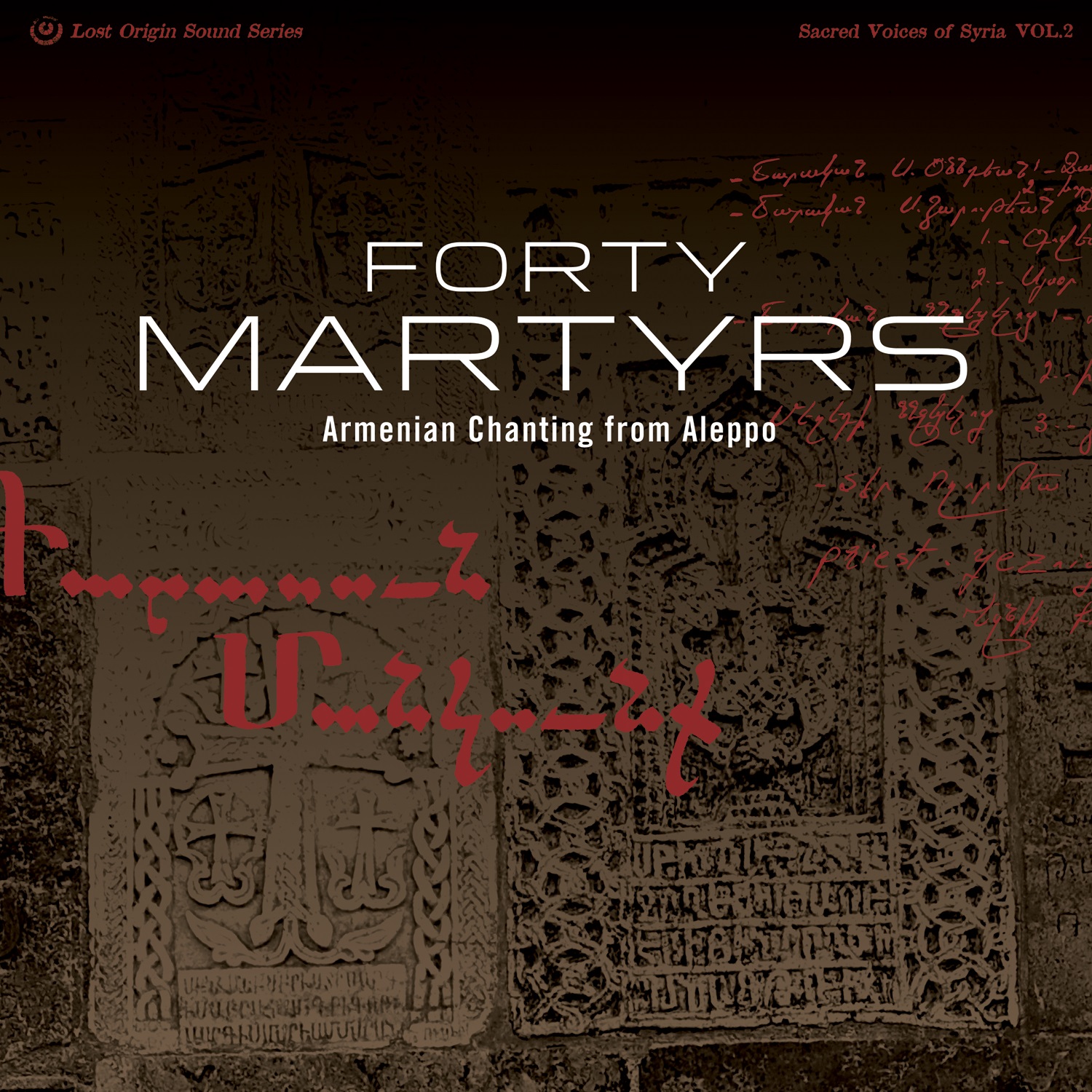
Wondrous Happenstance: A Last Echo from Syria’s Ancient and Embattled Armenian Community on Lost Origin Sound Series' Forty Martyrs: Armenian Chants from Aleppo
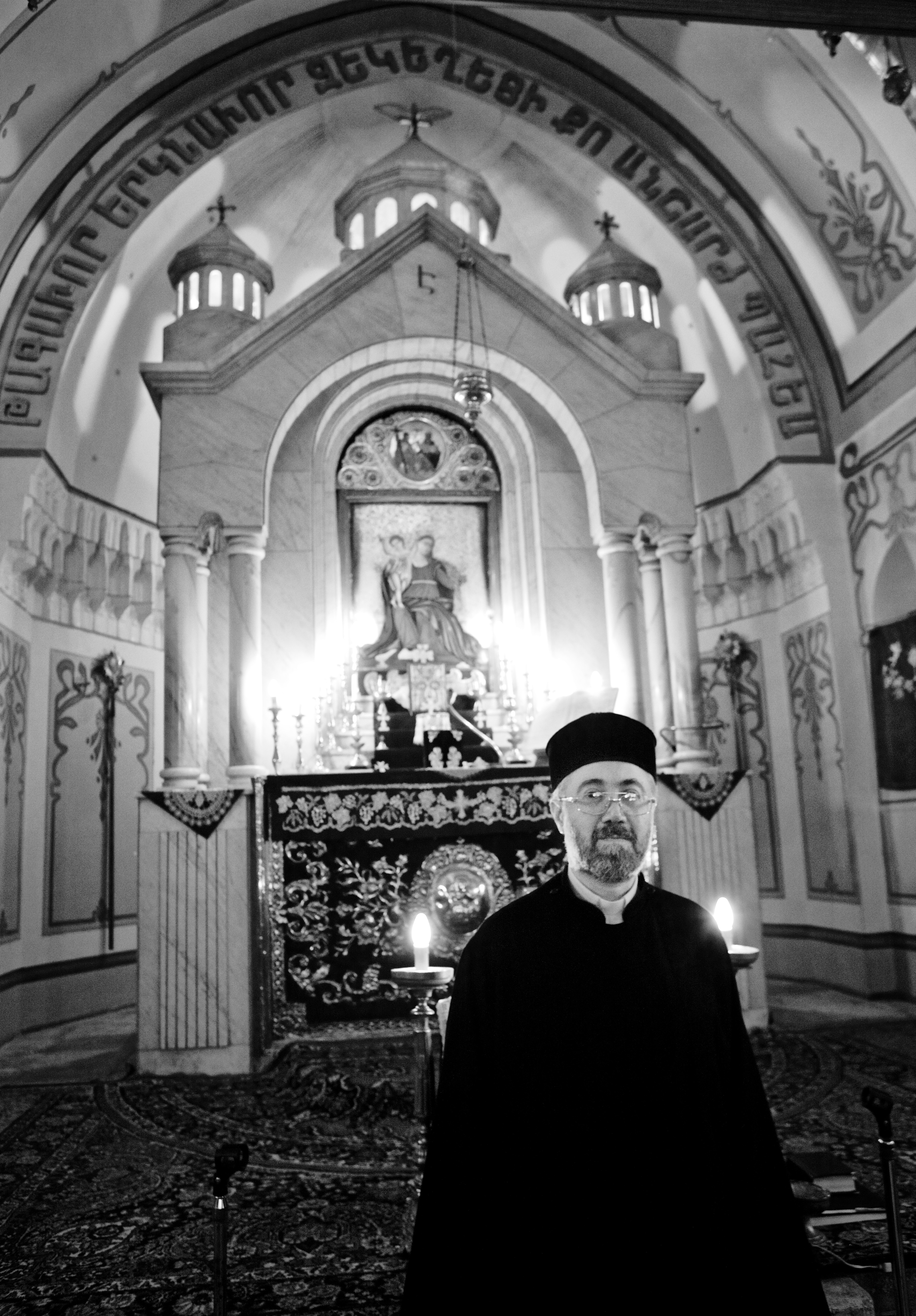
In one of Aleppo’s oldest quarters sits a church, once a hub and a harbor. The head priest there, The Very Reverend Yeznig Zegchanian, agreed to chant, but he was going to do it now and he was only going to do it once. Jason Hamacher, a drummer from DC who had stumbled into a serious fascination with Syria’s endangered spiritual traditions, sprinted back to his hotel to grab his equipment.
The result, recorded in the resonant Forty Martyrs Armenian Orthodox Church, captures a...
- Midwest Record, Album review, 04/13/2015, 04/13/15 Text
- World Music Central, Album review, 05/04/2015, Forty Martyrs: Armenian Chants from Aleppo is a recording of solo chants by Armenian priest Yeznig Zegchanian. Text
- Midwest Book Review, Album review, 05/06/2015, The Library CD Shelf Text
- Inside World Music, Album review, 05/08/2015, Yeznig Zegchanian/Jason Hamacher's 'Forty Martyrs: Armenian Chants From Aleppo' Text
- + Show More
News
In one of Aleppo’s oldest quarters sits a church, once a hub and a harbor. The head priest there, The Very Reverend Yeznig Zegchanian, agreed to chant, but he was going to do it now and he was only going to do it once. Jason Hamacher, a drummer from DC who had stumbled into a serious fascination with Syria’s endangered spiritual traditions, sprinted back to his hotel to grab his equipment.
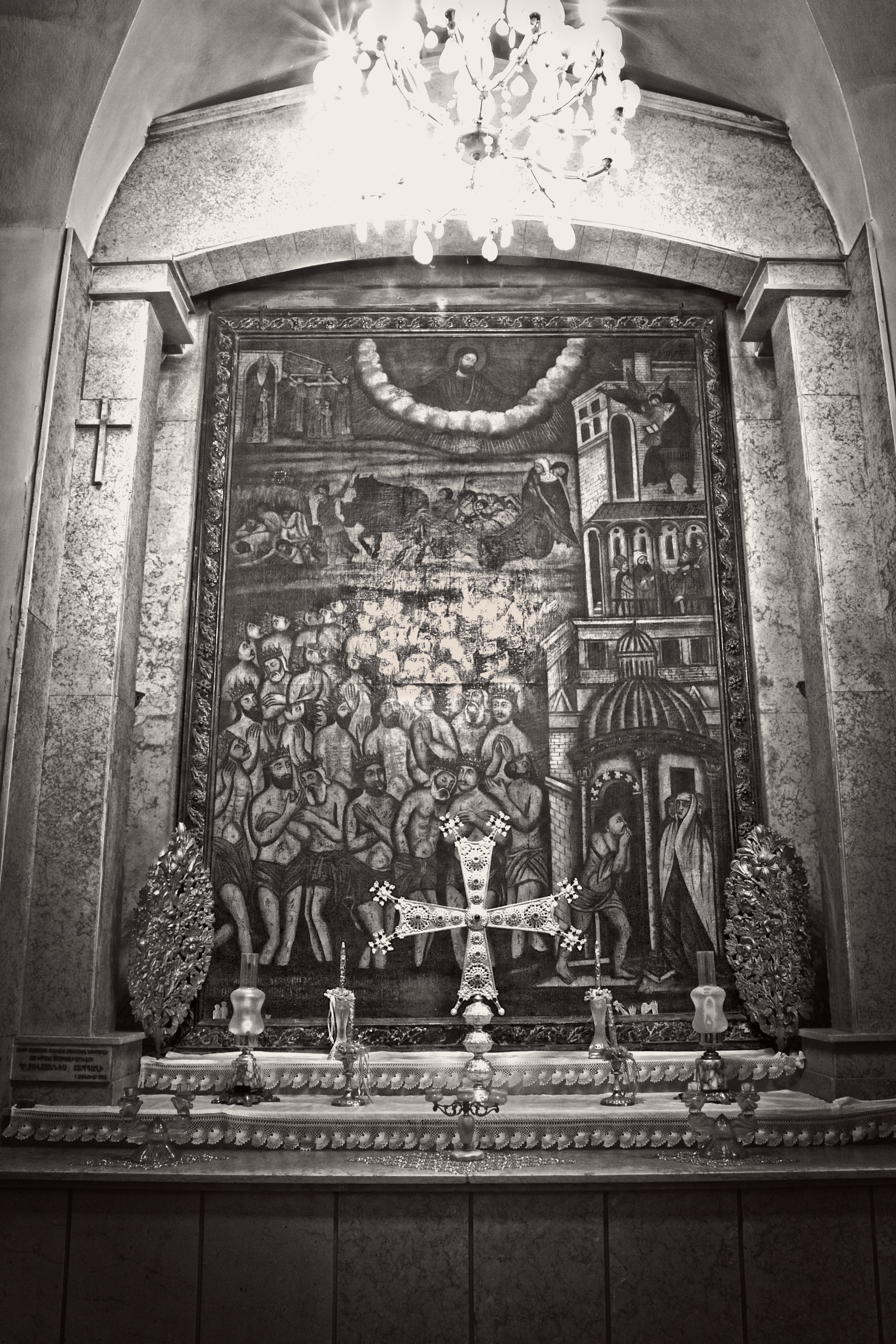
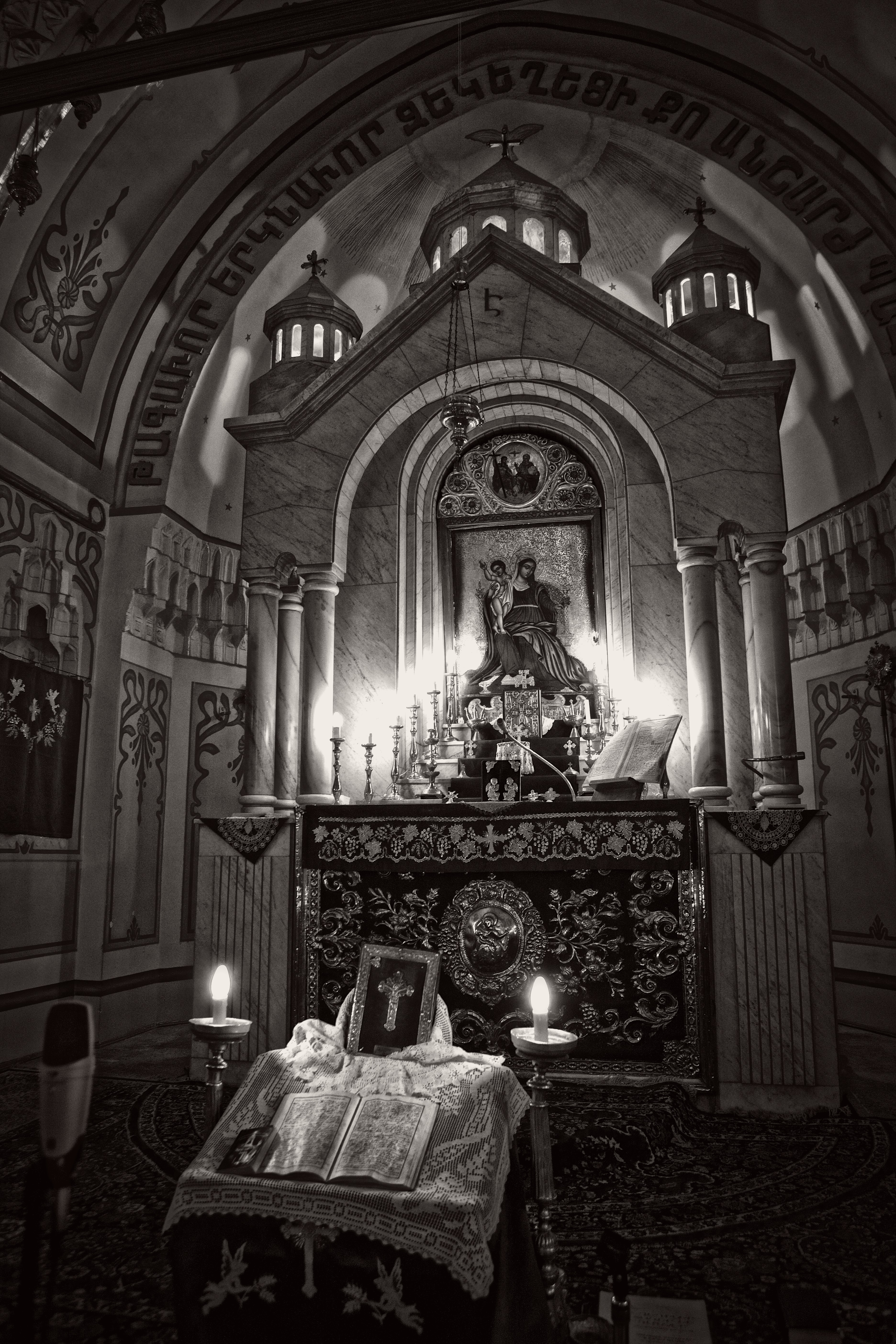
The result, recorded in the resonant Forty Martyrs Armenian Orthodox Church, captures a time, place, and language poised to blink out of existence. The city is embroiled in Syria’s heartrending civil war. The church’s congregants, descendants of several waves of Armenian refugees, have been scattered to the four winds. The language of the chants, West Armenian, once spoken in what is now Turkey, seems destined to die out in a generation.
To honor this embattled community and the city that sheltered it, Lost Origin Sounds Series is releasing Forty Martyrs: Armenian Chants from Aleppo at the centenary of the Armenian Genocide, the tragic and bloody Ottoman campaign that drove many Armenians to the centuries-old community in Aleppo. (release: April 14, 2015)
The storied Syrian city may seem like an unlikely place to encounter a large contingent of Christians from the Caucasus Mountains. Yet cosmopolitan and tolerant Aleppo was on the Silk Road, as well as a way station on the important pilgrimage route to Jerusalem. It has been home to Armenians since at least the 15th century, when Forty Martyrs was built.
“Forty Martyrs is in a dense quarter that was right outside the ancient walled city,” explains Hamacher, recalling his 2006 trip to Aleppo. “I had a few hours, so I walked into every building I could walk into. In the Armenian church, a priest was there. I asked if he spoke English. I told him I was recording a Syrian album. That was my first time I heard this liturgical music.” That moment is also the last track on the album, the Lord’s Prayer (“Our Father”).
A veteran of the DC punk/hardcore scene and a fan of exploratory music from far-flung places, Hamacher had wound up in Syria thanks to a misunderstanding (he heard Syrian not Serbian chant on a fateful phone call). It blossomed into a profound connection and interest in the country’s unique and diverse religious communities, t/lhe Jewish, Christian, and Muslim traditions that had chants and songs rarely recorded and never released to a wide audience. Though he pursued leads carefully, he also happened upon rarities, simply by opening doors and introducing himself.
When Hamacher returned in 2010, mere months before returning to Syria became impossible, he went back to the church and flagged down Zegchanian. With a portable rig and his translator, Jacob Warkez, who was half Armenian. As the priest sang a selection of chants from the liturgical year, Warkez jotted down notes, half in Armenian, half in English. (They were incorporated into the release’s artwork.)
The chants span more than a millennium; the earliest dates to the 5th-century (“Great and Wondrous Mystery”) and are sung in Western Armenian, one of the two standardized forms of the language, with its own pronunciation. Once spoken in Eastern Turkey, Aleppo remained one of the few strongholds of the dialect—until now.
Now, Aleppo’s Armenian community is threatened or scattered. Hamacher, for example, has yet to track down Zegchanian. Yet he was able to track down a great deal about the chants themselves. He discovered that the Library of Congress has its own Armenian-speaking archivist, thanks in part to the Library’s extensive holding of Armenian materials from Thomas Jefferson’s personal collection, currently Dr. Levon Avdoyan. Avdoyan pointed Hamacher to colleagues and scholars who helped paint a more complete picture of the ancient, beleaguered Armenian piece of Aleppo’s cultural history.
Thanks to Avdoyan, Hamacher discovered the profound significance of these recordings to many in the Armenian diaspora. He went into the Library of Congress to consult with the scholar, and he ran into Elyse Semerdjian of Whitman College, the world’s expert on the history of Aleppo’s Armenians. With ancestors who attended 40 Martyrs, Semerdjian was deeply moved by the chants. She marveled at Hamacher’s ear for history, and agreed to write liner notes, giving the cultural and historical context.
“Jason has captured the sounds of Aleppo’s Armenian community at an important moment in its history. The album will be remembered as an artifact of a way of life that will no longer exist when Syria’s war, replete with ethnic cleansing, is over,” says Semerdjian. “In this sense, 40 Martyrs is appropriately titled for our time for it is a precious archive of the sounds of one of Syria’s ancient communities on the eve of its extinction.”
“Every one of the recordings I made in Syria sprang from what feels like coincidence, but what turned out to be providential,” muses Hamacher. “Running into Elyse, walking into 40 Martyrs, it all seems random, but it all came together to document these threatened spiritual traditions and their music.” This serendipity in the context of what is unfolding in Syria today seems miraculous, indeed.
In one of Aleppo’s oldest quarters sits a church, once a hub and a harbor. The head priest there, The Very Reverend Yeznig Zegchanian, agreed to chant, but he was going to do it now and he was only going to do it once. Jason Hamacher, a drummer from DC who had stumbled into a serious fascination with Syria’s endangered spiritual traditions, sprinted back to his hotel to grab his equipment.
The result, recorded in the resonant Forty Martyrs Armenian Orthodox Church, captures a time, place, and language poised to blink out of existence. The city is embroiled in Syria’s heartrending civil war. The church’s congregants, descendants of several waves of Armenian refugees, have been scattered to the four winds. The language of the chants, West Armenian, once spoken in what is now Turkey, seems destined to die out in a generation.
To honor this embattled community and the city that sheltered it, Lost Origin Sounds Series is releasing Forty Martyrs: Armenian Chants from Aleppo at the centenary of the Armenian Genocide, the tragic and bloody Ottoman campaign that drove many Armenians to the centuries-old community in Aleppo. (release: April 14, 2015)
The storied Syrian city may seem like an unlikely place to encounter a large contingent of Christians from the Caucasus Mountains. Yet cosmopolitan and tolerant Aleppo was on the Silk Road, as well as a way station on the important pilgrimage route to Jerusalem. It has been home to Armenians since at least the 15th century, when Forty Martyrs was built.
“Forty Martyrs is in a dense quarter that was right outside the ancient walled city,” explains Hamacher, recalling his 2006 trip to Aleppo. “I had a few hours, so I walked into every building I could walk into. In the Armenian church, a priest was there. I asked if he spoke English. I told him I was recording a Syrian album. That was my first time I heard this liturgical music.” That moment is also the last track on the album, the Lord’s Prayer (“Our Father”).
A veteran of the DC punk/hardcore scene and a fan of exploratory music from far-flung places, Hamacher had wound up in Syria thanks to a misunderstanding (he heard Syrian not Serbian chant on a fateful phone call). It blossomed into a profound connection and interest in the country’s unique and diverse religious communities, t/lhe Jewish, Christian, and Muslim traditions that had chants and songs rarely recorded and never released to a wide audience. Though he pursued leads carefully, he also happened upon rarities, simply by opening doors and introducing himself.
When Hamacher returned in 2010, mere months before returning to Syria became impossible, he went back to the church and flagged down Zegchanian. With a portable rig and his translator, Jacob Warkez, who was half Armenian. As the priest sang a selection of chants from the liturgical year, Warkez jotted down notes, half in Armenian, half in English. (They were incorporated into the release’s artwork.)
The chants span more than a millennium; the earliest dates to the 5th-century (“Great and Wondrous Mystery”) and are sung in Western Armenian, one of the two standardized forms of the language, with its own pronunciation. Once spoken in Eastern Turkey, Aleppo remained one of the few strongholds of the dialect—until now.
Now, Aleppo’s Armenian community is threatened or scattered. Hamacher, for example, has yet to track down Zegchanian. Yet he was able to track down a great deal about the chants themselves. He discovered that the Library of Congress has its own Armenian-speaking archivist, thanks in part to the Library’s extensive holding of Armenian materials from Thomas Jefferson’s personal collection, currently Dr. Levon Avdoyan. Avdoyan pointed Hamacher to colleagues and scholars who helped paint a more complete picture of the ancient, beleaguered Armenian piece of Aleppo’s cultural history.
Thanks to Avdoyan, Hamacher discovered the profound significance of these recordings to many in the Armenian diaspora. He went into the Library of Congress to consult with the scholar, and he ran into Elyse Semerdjian of Whitman College, the world’s expert on the history of Aleppo’s Armenians. With ancestors who attended 40 Martyrs, Semerdjian was deeply moved by the chants. She marveled at Hamacher’s ear for history, and agreed to write liner notes, giving the cultural and historical context.
“Jason has captured the sounds of Aleppo’s Armenian community at an important moment in its history. The album will be remembered as an artifact of a way of life that will no longer exist when Syria’s war, replete with ethnic cleansing, is over,” says Semerdjian. “In this sense, 40 Martyrs is appropriately titled for our time for it is a precious archive of the sounds of one of Syria’s ancient communities on the eve of its extinction.”
“Every one of the recordings I made in Syria sprang from what feels like coincidence, but what turned out to be providential,” muses Hamacher. “Running into Elyse, walking into 40 Martyrs, it all seems random, but it all came together to document these threatened spiritual traditions and their music.” This serendipity in the context of what is unfolding in Syria today seems miraculous, indeed.
In one of Aleppo’s oldest quarters sits a church, once a hub and a harbor. The head priest there, The Very Reverend Yeznig Zegchanian, agreed to chant, but he was going to do it now and he was only going to do it once. Jason Hamacher, a drummer from DC who had stumbled into a serious fascination with Syria’s endangered spiritual traditions, sprinted back to his hotel to grab his equipment.
The result, recorded in the resonant Forty Martyrs Armenian Orthodox Church, captures a time, place, and language poised to blink out of existence. The city is embroiled in Syria’s heartrending civil war. The church’s congregants, descendants of several waves of Armenian refugees, have been scattered to the four winds. The language of the chants, West Armenian, once spoken in what is now Turkey, seems destined to die out in a generation.
To honor this embattled community and the city that sheltered it, Lost Origin Sounds Series is releasing Forty Martyrs: Armenian Chants from Aleppo at the centenary of the Armenian Genocide, the tragic and bloody Ottoman campaign that drove many Armenians to the centuries-old community in Aleppo. (release: April 14, 2015)
The storied Syrian city may seem like an unlikely place to encounter a large contingent of Christians from the Caucasus Mountains. Yet cosmopolitan and tolerant Aleppo was on the Silk Road, as well as a way station on the important pilgrimage route to Jerusalem. It has been home to Armenians since at least the 15th century, when Forty Martyrs was built.
“Forty Martyrs is in a dense quarter that was right outside the ancient walled city,” explains Hamacher, recalling his 2006 trip to Aleppo. “I had a few hours, so I walked into every building I could walk into. In the Armenian church, a priest was there. I asked if he spoke English. I told him I was recording a Syrian album. That was my first time I heard this liturgical music.” That moment is also the last track on the album, the Lord’s Prayer (“Our Father”).
A veteran of the DC punk/hardcore scene and a fan of exploratory music from far-flung places, Hamacher had wound up in Syria thanks to a misunderstanding (he heard Syrian not Serbian chant on a fateful phone call). It blossomed into a profound connection and interest in the country’s unique and diverse religious communities, t/lhe Jewish, Christian, and Muslim traditions that had chants and songs rarely recorded and never released to a wide audience. Though he pursued leads carefully, he also happened upon rarities, simply by opening doors and introducing himself.
When Hamacher returned in 2010, mere months before returning to Syria became impossible, he went back to the church and flagged down Zegchanian. With a portable rig and his translator, Jacob Warkez, who was half Armenian. As the priest sang a selection of chants from the liturgical year, Warkez jotted down notes, half in Armenian, half in English. (They were incorporated into the release’s artwork.)
The chants span more than a millennium; the earliest dates to the 5th-century (“Great and Wondrous Mystery”) and are sung in Western Armenian, one of the two standardized forms of the language, with its own pronunciation. Once spoken in Eastern Turkey, Aleppo remained one of the few strongholds of the dialect—until now.
Now, Aleppo’s Armenian community is threatened or scattered. Hamacher, for example, has yet to track down Zegchanian. Yet he was able to track down a great deal about the chants themselves. He discovered that the Library of Congress has its own Armenian-speaking archivist, thanks in part to the Library’s extensive holding of Armenian materials from Thomas Jefferson’s personal collection, currently Dr. Levon Avdoyan. Avdoyan pointed Hamacher to colleagues and scholars who helped paint a more complete picture of the ancient, beleaguered Armenian piece of Aleppo’s cultural history.
Thanks to Avdoyan, Hamacher discovered the profound significance of these recordings to many in the Armenian diaspora. He went into the Library of Congress to consult with the scholar, and he ran into Elyse Semerdjian of Whitman College, the world’s expert on the history of Aleppo’s Armenians. With ancestors who attended 40 Martyrs, Semerdjian was deeply moved by the chants. She marveled at Hamacher’s ear for history, and agreed to write liner notes, giving the cultural and historical context.
“Jason has captured the sounds of Aleppo’s Armenian community at an important moment in its history. The album will be remembered as an artifact of a way of life that will no longer exist when Syria’s war, replete with ethnic cleansing, is over,” says Semerdjian. “In this sense, 40 Martyrs is appropriately titled for our time for it is a precious archive of the sounds of one of Syria’s ancient communities on the eve of its extinction.”
“Every one of the recordings I made in Syria sprang from what feels like coincidence, but what turned out to be providential,” muses Hamacher. “Running into Elyse, walking into 40 Martyrs, it all seems random, but it all came together to document these threatened spiritual traditions and their music.” This serendipity in the context of what is unfolding in Syria today seems miraculous, indeed.
In one of Aleppo’s oldest quarters sits a church, once a hub and a harbor. The head priest there, The Very Reverend Yeznig Zegchanian, agreed to chant, but he was going to do it now and he was only going to do it once. Jason Hamacher, a drummer from DC who had stumbled into a serious fascination with Syria’s endangered spiritual traditions, sprinted back to his hotel to grab his equipment.
The result, recorded in the resonant Forty Martyrs Armenian Orthodox Church, captures a time, place, and language poised to blink out of existence. The city is embroiled in Syria’s heartrending civil war. The church’s congregants, descendants of several waves of Armenian refugees, have been scattered to the four winds. The language of the chants, West Armenian, once spoken in what is now Turkey, seems destined to die out in a generation.
To honor this embattled community and the city that sheltered it, Lost Origin Sounds Series is releasing Forty Martyrs: Armenian Chants from Aleppo at the centenary of the Armenian Genocide, the tragic and bloody Ottoman campaign that drove many Armenians to the centuries-old community in Aleppo. (release: April 14, 2015)
The storied Syrian city may seem like an unlikely place to encounter a large contingent of Christians from the Caucasus Mountains. Yet cosmopolitan and tolerant Aleppo was on the Silk Road, as well as a way station on the important pilgrimage route to Jerusalem. It has been home to Armenians since at least the 15th century, when Forty Martyrs was built.
“Forty Martyrs is in a dense quarter that was right outside the ancient walled city,” explains Hamacher, recalling his 2006 trip to Aleppo. “I had a few hours, so I walked into every building I could walk into. In the Armenian church, a priest was there. I asked if he spoke English. I told him I was recording a Syrian album. That was my first time I heard this liturgical music.” That moment is also the last track on the album, the Lord’s Prayer (“Our Father”).
A veteran of the DC punk/hardcore scene and a fan of exploratory music from far-flung places, Hamacher had wound up in Syria thanks to a misunderstanding (he heard Syrian not Serbian chant on a fateful phone call). It blossomed into a profound connection and interest in the country’s unique and diverse religious communities, t/lhe Jewish, Christian, and Muslim traditions that had chants and songs rarely recorded and never released to a wide audience. Though he pursued leads carefully, he also happened upon rarities, simply by opening doors and introducing himself.
When Hamacher returned in 2010, mere months before returning to Syria became impossible, he went back to the church and flagged down Zegchanian. With a portable rig and his translator, Jacob Warkez, who was half Armenian. As the priest sang a selection of chants from the liturgical year, Warkez jotted down notes, half in Armenian, half in English. (They were incorporated into the release’s artwork.)
The chants span more than a millennium; the earliest dates to the 5th-century (“Great and Wondrous Mystery”) and are sung in Western Armenian, one of the two standardized forms of the language, with its own pronunciation. Once spoken in Eastern Turkey, Aleppo remained one of the few strongholds of the dialect—until now.
Now, Aleppo’s Armenian community is threatened or scattered. Hamacher, for example, has yet to track down Zegchanian. Yet he was able to track down a great deal about the chants themselves. He discovered that the Library of Congress has its own Armenian-speaking archivist, thanks in part to the Library’s extensive holding of Armenian materials from Thomas Jefferson’s personal collection, currently Dr. Levon Avdoyan. Avdoyan pointed Hamacher to colleagues and scholars who helped paint a more complete picture of the ancient, beleaguered Armenian piece of Aleppo’s cultural history.
Thanks to Avdoyan, Hamacher discovered the profound significance of these recordings to many in the Armenian diaspora. He went into the Library of Congress to consult with the scholar, and he ran into Elyse Semerdjian of Whitman College, the world’s expert on the history of Aleppo’s Armenians. With ancestors who attended 40 Martyrs, Semerdjian was deeply moved by the chants. She marveled at Hamacher’s ear for history, and agreed to write liner notes, giving the cultural and historical context.
“Jason has captured the sounds of Aleppo’s Armenian community at an important moment in its history. The album will be remembered as an artifact of a way of life that will no longer exist when Syria’s war, replete with ethnic cleansing, is over,” says Semerdjian. “In this sense, 40 Martyrs is appropriately titled for our time for it is a precious archive of the sounds of one of Syria’s ancient communities on the eve of its extinction.”
“Every one of the recordings I made in Syria sprang from what feels like coincidence, but what turned out to be providential,” muses Hamacher. “Running into Elyse, walking into 40 Martyrs, it all seems random, but it all came together to document these threatened spiritual traditions and their music.” This serendipity in the context of what is unfolding in Syria today seems miraculous, indeed.
In one of Aleppo’s oldest quarters sits a church, once a hub and a harbor. The head priest there, The Very Reverend Yeznig Zegchanian, agreed to chant, but he was going to do it now and he was only going to do it once. Jason Hamacher, a drummer from DC who had stumbled into a serious fascination with Syria’s endangered spiritual traditions, sprinted back to his hotel to grab his equipment.
The result, recorded in the resonant Forty Martyrs Armenian Orthodox Church, captures a time, place, and language poised to blink out of existence. The city is embroiled in Syria’s heartrending civil war. The church’s congregants, descendants of several waves of Armenian refugees, have been scattered to the four winds. The language of the chants, West Armenian, once spoken in what is now Turkey, seems destined to die out in a generation.
To honor this embattled community and the city that sheltered it, Lost Origin Sounds Series is releasing Forty Martyrs: Armenian Chants from Aleppo at the centenary of the Armenian Genocide, the tragic and bloody Ottoman campaign that drove many Armenians to the centuries-old community in Aleppo. (release: April 14, 2015)
The storied Syrian city may seem like an unlikely place to encounter a large contingent of Christians from the Caucasus Mountains. Yet cosmopolitan and tolerant Aleppo was on the Silk Road, as well as a way station on the important pilgrimage route to Jerusalem. It has been home to Armenians since at least the 15th century, when Forty Martyrs was built.
“Forty Martyrs is in a dense quarter that was right outside the ancient walled city,” explains Hamacher, recalling his 2006 trip to Aleppo. “I had a few hours, so I walked into every building I could walk into. In the Armenian church, a priest was there. I asked if he spoke English. I told him I was recording a Syrian album. That was my first time I heard this liturgical music.” That moment is also the last track on the album, the Lord’s Prayer (“Our Father”).
A veteran of the DC punk/hardcore scene and a fan of exploratory music from far-flung places, Hamacher had wound up in Syria thanks to a misunderstanding (he heard Syrian not Serbian chant on a fateful phone call). It blossomed into a profound connection and interest in the country’s unique and diverse religious communities, t/lhe Jewish, Christian, and Muslim traditions that had chants and songs rarely recorded and never released to a wide audience. Though he pursued leads carefully, he also happened upon rarities, simply by opening doors and introducing himself.
When Hamacher returned in 2010, mere months before returning to Syria became impossible, he went back to the church and flagged down Zegchanian. With a portable rig and his translator, Jacob Warkez, who was half Armenian. As the priest sang a selection of chants from the liturgical year, Warkez jotted down notes, half in Armenian, half in English. (They were incorporated into the release’s artwork.)
The chants span more than a millennium; the earliest dates to the 5th-century (“Great and Wondrous Mystery”) and are sung in Western Armenian, one of the two standardized forms of the language, with its own pronunciation. Once spoken in Eastern Turkey, Aleppo remained one of the few strongholds of the dialect—until now.
Now, Aleppo’s Armenian community is threatened or scattered. Hamacher, for example, has yet to track down Zegchanian. Yet he was able to track down a great deal about the chants themselves. He discovered that the Library of Congress has its own Armenian-speaking archivist, thanks in part to the Library’s extensive holding of Armenian materials from Thomas Jefferson’s personal collection, currently Dr. Levon Avdoyan. Avdoyan pointed Hamacher to colleagues and scholars who helped paint a more complete picture of the ancient, beleaguered Armenian piece of Aleppo’s cultural history.
Thanks to Avdoyan, Hamacher discovered the profound significance of these recordings to many in the Armenian diaspora. He went into the Library of Congress to consult with the scholar, and he ran into Elyse Semerdjian of Whitman College, the world’s expert on the history of Aleppo’s Armenians. With ancestors who attended 40 Martyrs, Semerdjian was deeply moved by the chants. She marveled at Hamacher’s ear for history, and agreed to write liner notes, giving the cultural and historical context.
“Jason has captured the sounds of Aleppo’s Armenian community at an important moment in its history. The album will be remembered as an artifact of a way of life that will no longer exist when Syria’s war, replete with ethnic cleansing, is over,” says Semerdjian. “In this sense, 40 Martyrs is appropriately titled for our time for it is a precious archive of the sounds of one of Syria’s ancient communities on the eve of its extinction.”
“Every one of the recordings I made in Syria sprang from what feels like coincidence, but what turned out to be providential,” muses Hamacher. “Running into Elyse, walking into 40 Martyrs, it all seems random, but it all came together to document these threatened spiritual traditions and their music.” This serendipity in the context of what is unfolding in Syria today seems miraculous, indeed.